(
(
Blog
Blog
)
)
Can We Trust the Bible? Evidence for the Reliability of Scripture
Can We Trust the Bible? Evidence for the Reliability of Scripture
Christian faith doesn’t require us to stop asking questions. The Bible can withstand them.
Christian faith doesn’t require us to stop asking questions. The Bible can withstand them.
by
Max Lyons
23
min read
Introduction: Can We Really Trust the Bible?
The Bible is the most important book in Christianity.
Christians read it.
Churches preach from it.
People build their beliefs, values, and lives around what it says.
But that raises an important question:
Can we actually trust the Bible?
After thousands of years, how do we know the Bible hasn’t been changed?
Who wrote it?
How do we know the stories actually happened?
Were the books of the Bible chosen by a group of religious leaders centuries later?
What about contradictions?
What about translation errors?
And isn’t believing the Bible is true simply a matter of faith?
These are fair questions.
In fact, if we’re going to build our lives around what the Bible says, they’re questions worth asking.
Christianity doesn’t require us to be afraid of examining the evidence.
Luke begins his Gospel by explaining that he had:
“Carefully investigated everything from the beginning.”
— Luke 1:3
And when Paul preached in Berea, the people were praised because they:
“Examined the Scriptures every day to see if what Paul said was true.”
— Acts 17:11
Christian faith isn’t supposed to require intellectual dishonesty.
So rather than simply saying, “Trust the Bible because the Bible says you should,” let’s look at some of the reasons Christians believe Scripture can actually be trusted.
What Is the Bible?
Before asking whether we can trust the Bible, it helps to understand what the Bible actually is.
The Bible isn’t one book written by one person at one moment in history.
It’s a collection of 66 books, written by numerous human authors across many centuries.
It contains different types of literature, including:
History
Poetry
Wisdom
Prophecy
Biography
Letters
Apocalyptic literature
The Bible is divided into two major sections.
The Old Testament
The Old Testament tells the story of creation, humanity’s rebellion against God, God’s covenant relationship with Israel, and His unfolding plan of redemption.
The New Testament
The New Testament centers on Jesus Christ—His life, teaching, death, resurrection, and the beginning and mission of the Church.
Despite its variety, the Bible tells one overarching story:
God created humanity, sin separated us from Him, and God acted throughout history to redeem humanity, ultimately through Jesus Christ.
Christians believe something even greater about Scripture.
We believe God worked through human authors so that what they wrote was His Word.
Paul says:
“All Scripture is God-breathed.”
— 2 Timothy 3:16
So when Christians call the Bible the Word of God, we aren’t saying God dropped a completed book out of heaven.
God worked through real people, languages, cultures, personalities, historical circumstances, and literary styles.
And yet Christians believe the Holy Spirit worked through that process to communicate what God intended.
How Do We Know the Bible Hasn’t Been Changed?
This may be the most common question about the reliability of the Bible.
The Bible is ancient.
The printing press wasn’t invented until many centuries after the New Testament was written.
Before that, biblical books had to be copied by hand.
So how do we know someone didn’t change them?
The answer is found in something called manuscript evidence.
What Is a Biblical Manuscript?
A manuscript is a handwritten copy of an ancient text.
We don’t possess the original physical document of Paul’s letter to the Romans.
We don’t have the original parchment on which John wrote his Gospel.
That’s normal for ancient literature.
The original physical copies of virtually all ancient works have disappeared.
Historians therefore study surviving manuscript copies to determine what the original authors wrote.
And when it comes to the New Testament, we have an extraordinary amount of manuscript evidence.
Thousands of Greek New Testament manuscripts survive, along with thousands more manuscripts in ancient languages such as Latin, Syriac, and Coptic.
That gives scholars a massive amount of material to compare.
The important point isn’t simply:
“There are lots of copies.”
It’s that having many manuscripts from different times and geographic locations allows scholars to compare them with one another.
If one manuscript contains a copying error but hundreds of others preserve a different reading, scholars can identify the difference.
Instead of making it easier to secretly change the Bible, having so many manuscripts makes widespread undetected alteration extremely difficult.
We don’t have to guess what happened to the biblical text. We can compare the surviving evidence.
But Aren’t There Differences Between Biblical Manuscripts?
Yes.
This is important to acknowledge.
Ancient manuscripts contain what scholars call textual variants.
A textual variant is simply a difference between manuscript copies.
Before printing presses, scribes copied manuscripts by hand.
And human beings make mistakes.
A scribe might:
Misspell a word
Repeat a word
Skip a word
Reverse word order
Write a synonym
Accidentally skip a line
So when thousands of handwritten manuscripts are compared, differences appear.
That isn’t something Christian scholars are hiding.
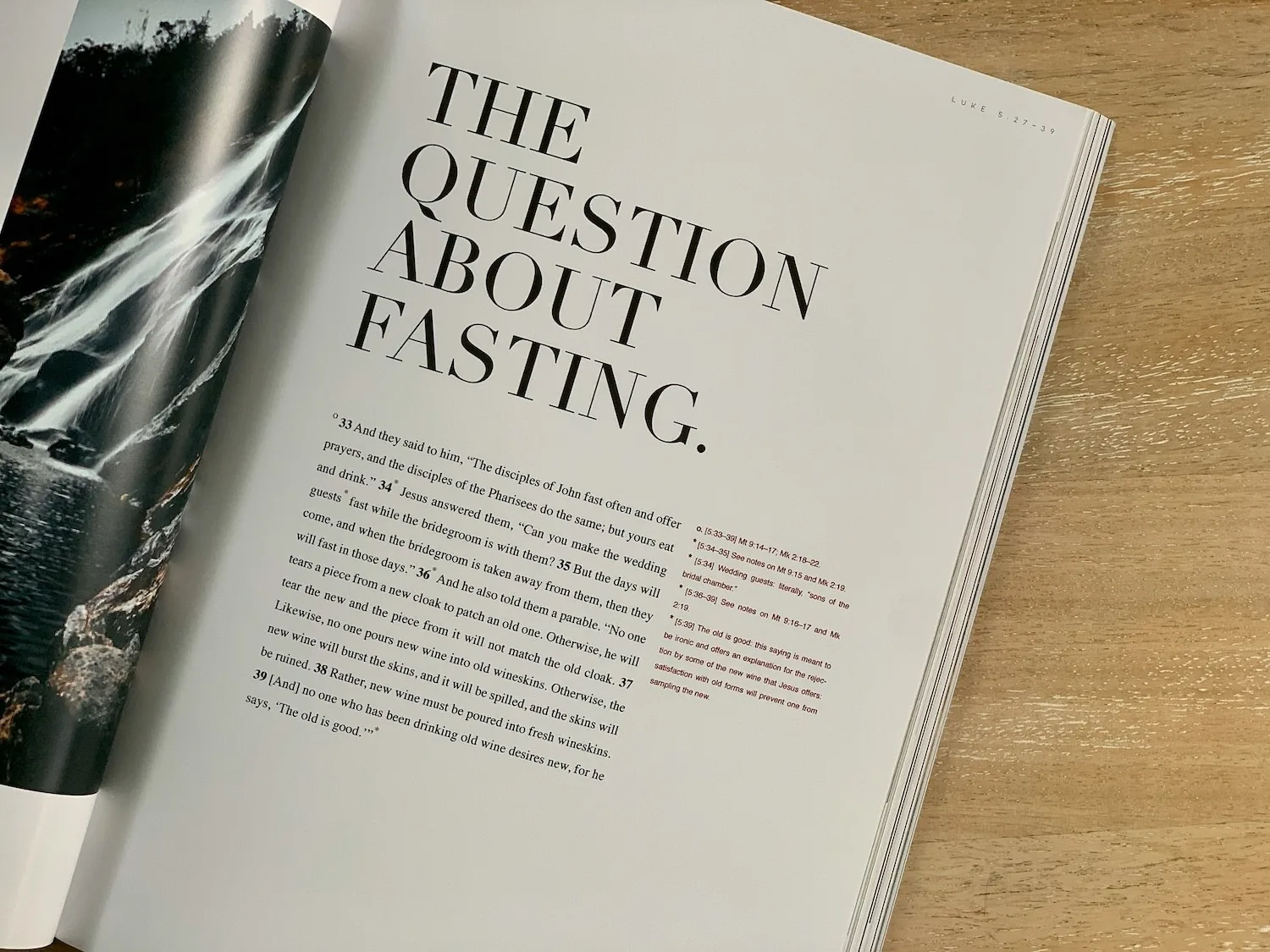
Modern Bible translations often tell you about significant variants directly in the footnotes.
The real question isn’t:
“Are there any differences between manuscripts?”
There are.
The better question is:
“Do those differences prevent us from knowing what the biblical authors originally wrote?”
And the manuscript evidence gives scholars substantial confidence in reconstructing the text.
The overwhelming majority of variants involve relatively minor matters such as spelling, word order, or other differences that don’t substantially change the meaning of a passage.
There are also a smaller number of more significant variants that scholars continue to study.
But those are generally known and openly discussed.
No conspiracy is required. The evidence is available for examination.
What About Mark 16 and John 8?
If you read a modern Bible, you may encounter notes around passages such as:
Mark 16:9–20
John 7:53–8:11
Some ancient manuscripts don’t contain these passages.
Doesn’t that undermine confidence in the Bible?
Actually, it demonstrates something important about modern biblical scholarship.
We’re being told about it.
Scholars compare ancient manuscripts and identify places where the evidence is uncertain.
Rather than secretly hiding those differences, modern translations often place notes directly on the page.
That allows readers to see where significant textual questions exist.
And importantly, no essential Christian doctrine depends exclusively on one disputed textual passage.
The identity of Jesus, His death, His resurrection, salvation by grace, the Trinity, and the central message of Christianity don’t disappear because of a textual variant.
Textual criticism isn’t evidence that the Bible can’t be trusted.
It’s one of the tools scholars use to determine the earliest recoverable wording of the biblical text.
What Are the Dead Sea Scrolls?
One of the most significant archaeological discoveries relating to the Old Testament occurred beginning in 1947 near the Dead Sea.
Ancient Jewish manuscripts were discovered in caves near Qumran.
These became known as the Dead Sea Scrolls.
Among them were manuscripts and fragments representing books of the Old Testament.
Why was this discovery so important?
Some of these biblical manuscripts were roughly a thousand years older than the medieval Hebrew manuscripts scholars had previously relied upon for comparison.
That created an extraordinary opportunity.
Scholars could compare much earlier biblical texts with later copies.
The scrolls revealed both textual differences and remarkable continuity in the transmission of the Hebrew Scriptures.
The Dead Sea Scrolls don’t prove every claim in the Bible.
But they provide important evidence that the Old Testament text was being transmitted long before the medieval manuscripts available to modern scholars.
Has the Bible Been Changed Through Translation?
Another common objection goes something like this:
“The Bible has been translated so many times that surely the original meaning has been lost.”
Sometimes people compare Bible translation to the game Telephone.
One person whispers something to another person.
That person whispers it to someone else.
Eventually the message becomes completely distorted.
But that’s not how modern Bible translation works.
Your English Bible isn’t normally translated:
Greek → Latin → French → German → Old English → Modern English.
Modern Bible translators work directly from ancient Hebrew, Aramaic, and Greek texts.
When a new English translation is produced, scholars return to the ancient manuscript evidence.
That means translations aren’t simply copying the previous English translation.
They’re repeatedly going back to the source languages.
Different Bible translations sometimes phrase passages differently because translation requires judgment about how best to communicate meaning from one language into another.
But that’s very different from saying the Bible has been progressively corrupted through repeated translation.
Why Are There So Many Bible Translations?
If the Bible is reliable, why do we have the NIV, ESV, NLT, CSB, NKJV, NASB, and so many others?
Because translation involves choices.
Languages don’t map perfectly onto one another.
Sometimes translators prioritize reproducing the structure of the original language as closely as possible.
Other translations prioritize communicating the meaning naturally in modern English.
That’s why translations can sound different while communicating the same underlying text.
Having multiple translations isn’t evidence that we don’t know what the Bible says.
In many cases, comparing translations can actually help readers understand the range of meaning present in the original language.
Is the Bible Historically Reliable?
Preserving the original wording is one question.
But there’s another:
Did the events described actually happen?
That’s a different question.
A perfectly preserved ancient document could still contain false information.
So historians also examine the Bible’s historical claims.
They consider things such as:
Geography
Political leaders
Ancient cities
Cultural practices
Inscriptions
Coins
Archaeological discoveries
Other ancient writings
Archaeology has repeatedly illuminated the historical world described by Scripture.
But we should also be careful not to exaggerate the argument.
Archaeology doesn’t “prove the Bible” in the sense that every biblical event has been independently verified by an archaeological discovery.
That’s not how ancient history works.
Many ancient events leave little or no archaeological trace.
Instead, archaeology can help answer a more reasonable question:
Does the Bible accurately reflect the historical world it claims to describe?
In many cases, archaeological discoveries have confirmed people, locations, titles, customs, and circumstances described in Scripture.
Does Archaeology Prove the Bible Is True?
Not exactly.
Archaeology can confirm historical details.
It can challenge previous assumptions.
It can help us understand ancient cultures.
It can show that biblical writers knew the places, people, and practices they described.
But archaeology can’t dig up a piece of pottery that proves:
“Jesus is Lord.”
Those are different kinds of claims.
Historical evidence can take us a long way.
But Christianity ultimately makes theological claims about the meaning of historical events.
For example, history can investigate whether Jesus was crucified.
It can investigate what Jesus’ followers claimed after His death.
It can examine the rise of early Christianity.
But the claim that Jesus’ death provides forgiveness for our sins is theological as well as historical.
Evidence matters. But not every truth claim can be tested with the same kind of evidence.
Can We Trust the New Testament Accounts of Jesus?
This question is especially important.
Christianity ultimately stands or falls on Jesus.
Paul says:
“If Christ has not been raised, your faith is futile.”
— 1 Corinthians 15:17
Christianity isn’t merely a collection of timeless moral teachings.
It makes historical claims.
Jesus lived.
Jesus was crucified.
Jesus was buried.
And Christians claim Jesus physically rose from the dead.
The New Testament writings were produced in the first century within the historical world they describe.
They identify real rulers, cities, religious groups, political circumstances, and geographical locations.
Luke explicitly says he investigated eyewitness testimony:
“Many have undertaken to draw up an account of the things that have been fulfilled among us… just as they were handed down to us by those who from the first were eyewitnesses.”
— Luke 1:1–2
And Paul refers to hundreds of people who claimed to have encountered the risen Jesus:
“He appeared to more than five hundred of the brothers and sisters at the same time.”
— 1 Corinthians 15:6
The New Testament doesn’t present the resurrection as a symbolic lesson invented centuries later.
It presents it as an event that happened in history.
That’s why the reliability of the New Testament matters so much.
Were the Gospels Written Hundreds of Years After Jesus?
No.
The four canonical Gospels—Matthew, Mark, Luke, and John—come from the first century, not several centuries after Jesus.
Even earlier than the completed Gospel accounts, Paul’s letters were already circulating among Christian communities.
One particularly important passage appears in 1 Corinthians 15.
Paul writes:
“For what I received I passed on to you as of first importance…”
He then summarizes the message:
“Christ died for our sins… he was buried… he was raised on the third day…”
— 1 Corinthians 15:3–4
Many scholars recognize that Paul is passing along an early Christian tradition that predates the writing of 1 Corinthians itself.
That matters because it shows that belief in Jesus’ death and resurrection wasn’t a legend that slowly appeared hundreds of years later.
The resurrection was at the center of the Christian message from the beginning.
How Were the Books of the Bible Chosen?
Another common claim is that powerful church leaders met centuries after Jesus and arbitrarily decided which books would be included in the Bible.
The actual history is more complicated.
The early Church didn’t create the authority of biblical books simply by putting them on a list.
The process of recognizing the New Testament canon developed over time.
Early Christians considered factors such as:
Connection to the apostles
Consistency with the teaching received from the apostles
Widespread use among Christian churches
Recognition across the Christian community
Some books were recognized very early and broadly.
A smaller number were debated for longer.
Eventually, church councils formally recognized the collection that had already become widely established within the Church.
This distinction matters:
The Church didn’t make these books authoritative by voting for them. It recognized books Christians believed already carried apostolic authority.
What About Books That Were Left Out of the Bible?
You may have heard claims about “lost gospels” or books that were supposedly removed from the Bible because church leaders didn’t like what they said.
Ancient Christian and religious writings certainly exist outside the New Testament.
But simply calling something a “gospel” doesn’t make it equally early, apostolic, or historically reliable.
Many writings commonly discussed as alternative gospels were written significantly later than the New Testament Gospels and weren’t broadly recognized by early Christians as apostolic Scripture.
The existence of other ancient religious books doesn’t mean they were all once considered equal candidates for the Bible.
The historical questions are:
When was the document written?
Who wrote it?
How close was it to the apostles?
How widely was it used?
How did early Christians understand it?
Those questions give us a much clearer picture than the idea that dozens of equally legitimate gospels were arbitrarily suppressed.
Does the Bible Contain Contradictions?
This is another major question.
People often encounter lists online claiming the Bible contains hundreds of contradictions.
Some deserve serious examination.
Others disappear fairly quickly when context is considered.
An important distinction is the difference between a contradiction and a difference.
Two statements contradict one another when they cannot both be true in the same sense at the same time.
But two accounts can contain different details without contradicting one another.
Imagine four people witness a car accident.
One says:
“A black SUV hit the car.”
Another says:
“A Toyota hit the car.”
Those statements aren’t contradictory if the vehicle was a black Toyota SUV.
Different witnesses may emphasize different details.
The same principle matters when reading parallel biblical accounts.
The Gospel writers sometimes:
Include different details
Arrange material differently
Summarize statements
Emphasize different themes
Describe the same event from different perspectives
Difference isn’t automatically contradiction.
What About Difficult Bible Passages?
There are difficult passages in Scripture.
Christians shouldn’t pretend otherwise.
Some passages raise historical questions.
Others raise moral questions.
Some are difficult because we’re reading texts written thousands of years ago in cultures very different from ours.
Others are difficult because the Bible itself challenges our assumptions.
A mature approach to Scripture doesn’t say:
“I don’t immediately understand this, therefore the Bible must be wrong.”
Nor should it say:
“I’m a Christian, therefore I’m not allowed to ask questions.”
Instead:
Study the context.
Understand the genre.
Learn the historical background.
Compare Scripture with Scripture.
Consult thoughtful scholarship.
And be willing to admit when a question doesn’t have an easy answer.
Trust doesn’t require pretending difficult questions don’t exist.
Isn’t the Bible Full of Scientific Errors?
This question often comes from expecting the Bible to function like a modern science textbook.
But the Bible was written in ancient literary and cultural contexts.
It regularly uses ordinary observational language just as we still do today.
We say:
“The sun rose this morning.”
We don’t mean the sun literally traveled around the earth.
We’re describing the world as we experience it.
The Bible also contains poetry, metaphor, imagery, symbolism, history, wisdom literature, prophecy, letters, and other genres.
Good interpretation asks:
What was this author intending to communicate?
We shouldn’t demand that biblical poetry function like a laboratory report any more than we would demand that a poem written today read like a physics textbook.
The Bible’s purpose isn’t to answer every scientific question humans might eventually ask.
Its central story concerns God, humanity, sin, redemption, and Jesus Christ.
What About the Bible’s Prophecies?
Christians have also historically pointed to biblical prophecy as evidence for Scripture.
The Old Testament contains promises and expectations that Christians believe find their ultimate fulfillment in Jesus.
Jesus Himself said:
“These are the very Scriptures that testify about me.”
— John 5:39
After His resurrection, Luke says:
“Beginning with Moses and all the Prophets, he explained to them what was said in all the Scriptures concerning himself.”
— Luke 24:27
Christians see the Bible not merely as dozens of disconnected religious writings but as an unfolding story ultimately centered on Jesus.
Individual prophetic claims should be interpreted carefully and in their biblical context.
But the larger unity of Scripture’s redemptive story is one of the reasons Christians find the Bible so compelling.
Who Actually Wrote the Bible?
The Bible has both human authorship and, according to Christian belief, divine authorship.
Different books were written by different people.
They wrote with different personalities.
Different vocabularies.
Different styles.
Different experiences.
Luke sounds different from John.
Paul sounds different from Peter.
Proverbs reads differently from Revelation.
Christianity doesn’t require us to erase those differences.
Instead, Scripture says:
“Prophets, though human, spoke from God as they were carried along by the Holy Spirit.”
— 2 Peter 1:21
Christians believe God worked through human authors rather than bypassing their humanity.
That’s why the Bible can simultaneously be described as words written by people and the Word inspired by God.
What Does It Mean That the Bible Is Inspired?
When Christians say Scripture is inspired, we don’t merely mean the authors felt inspired like someone writing a song or poem.
Second Timothy 3:16 uses a term translated:
“God-breathed.”
The Christian claim is that Scripture ultimately originates from God.
That doesn’t mean every biblical author entered a trance while God dictated every sentence.
God worked through the authors’ personalities, research, experiences, vocabulary, culture, and circumstances.
Luke researched.
David wrote poetry.
Paul wrote letters addressing specific churches.
Solomon and others wrote wisdom literature.
And through those human processes, Christians believe the Holy Spirit communicated God’s truth.
Is the Bible Inerrant?
Christians sometimes use the word inerrancy to describe their belief that Scripture, in its original writings and properly understood according to its intended meaning, is true in what it affirms.
That doesn’t mean:
Every verse should be interpreted literally
Poetry isn’t poetic
Figures of speech aren’t figures of speech
Every biblical character’s words are endorsed by God
Every English translation is perfect
Every interpretation Christians make is correct
It means Christians trust Scripture as truthful in what its authors, under God’s inspiration, intended to communicate.
This is one reason context and interpretation matter so much.
Believing the Bible is true doesn’t mean believing every interpretation of the Bible is true.
Can We Trust Our English Bibles?
Yes.
No translation is perfect.
Translation always involves judgment.
But Christians today have access to excellent translations produced by teams of scholars working from Hebrew, Aramaic, and Greek manuscripts.
Translations such as the:
NIV
ESV
CSB
NLT
NASB
NKJV
use somewhat different translation philosophies, but they allow English-speaking readers to understand Scripture with remarkable accessibility.
You don’t need to know Greek or Hebrew to genuinely know what the Bible teaches.
And when an important translation or manuscript issue exists, good modern Bibles frequently tell readers in their footnotes.
Does Evidence Prove That the Bible Is God’s Word?
This is where an important distinction needs to be made.
Historical evidence can help us ask:
Has the text been reliably transmitted?
Were these writings produced in the historical periods they claim?
Do external sources corroborate biblical details?
Can we reasonably know what the authors wrote?
Those are historical questions.
But saying:
“Therefore, these writings are inspired by God”
is a theological conclusion.
Historical evidence can remove significant barriers to faith.
It can demonstrate that Christianity isn’t asking us to trust a book whose text has been hopelessly corrupted.
But recognizing Scripture as God’s Word ultimately involves encountering what Scripture reveals—supremely, the person of Jesus Christ.
Jesus said:
“Your word is truth.”
— John 17:17
Christians trust Scripture not simply because we possess ancient manuscripts.
We trust Scripture because we believe the God revealed through Scripture is trustworthy.
What if I Still Have Doubts About the Bible?
Then keep asking questions.
Doubt doesn’t need to be the enemy of faith.
Sometimes doubt exposes assumptions that need better answers.
Sometimes it forces us to move from inherited faith to examined faith.
If you’re struggling with the Bible:
Read it.
Don’t only read what other people say about it.
Start with one of the Gospels.
Read John.
Look at Jesus.
Ask questions.
Research your objections.
Talk with thoughtful Christians.
Learn from credible biblical scholars.
And pray honestly:
“God, if You are real, help me see the truth.”
You don’t have to pretend certainty you don’t have.
But don’t stop investigating either.
An unanswered question isn’t the same thing as an unanswerable question.
Frequently Asked Questions About the Reliability of the Bible
Can We Trust the Bible?
There are strong historical reasons to trust that the biblical text has been carefully preserved and that we can substantially recover what its authors wrote.
Christians go further and believe Scripture is God’s inspired Word.
Has the Bible Been Changed?
There are textual differences among ancient manuscripts, but because scholars possess so many manuscripts to compare, those differences can be studied openly.
There is no evidence that the Bible was secretly rewritten as a whole at some later point in history.
Do We Have the Original Bible Manuscripts?
No.
The original physical manuscripts aren’t known to survive.
This is normal for ancient literature.
Scholars reconstruct ancient texts by comparing surviving manuscript copies.
Are There Errors in Bible Manuscripts?
Handwritten manuscripts contain copying differences.
Most are minor, while a smaller number require more careful textual analysis.
Modern biblical scholarship openly studies these variants.
How Do We Know What the Bible Originally Said?
Scholars use textual criticism to compare manuscripts from different times, locations, and textual traditions to determine the earliest recoverable wording.
Has the Bible Been Lost in Translation?
No.
Modern Bible translations are produced directly from ancient Hebrew, Aramaic, and Greek texts rather than being repeatedly translated from one modern language into another.
Why Are There So Many Bible Versions?
Different translations use different approaches for communicating ancient Hebrew and Greek accurately and naturally in modern languages.
Are There Contradictions in the Bible?
There are difficult passages and accounts containing different details.
Not every difference constitutes a logical contradiction.
Each alleged contradiction should be examined individually and in context.
Who Decided Which Books Belong in the Bible?
The biblical canon developed through a historical process in which the early Church recognized writings connected to the apostles and received broadly as authoritative Scripture.
Church councils later formally affirmed a collection that had largely already been recognized and used among Christians.
Did Constantine Create the Bible?
No.
Constantine didn’t write the Bible or simply decide which books Christians would believe.
Christian writings were being read, circulated, copied, quoted, and recognized long before Constantine.
What Are the Dead Sea Scrolls?
The Dead Sea Scrolls are ancient Jewish manuscripts discovered beginning in 1947 near Qumran.
They include biblical manuscripts that gave scholars significantly earlier witnesses to portions of the Old Testament text.
Does Archaeology Prove the Bible?
Archaeology cannot prove every theological claim in Scripture.
But archaeological discoveries can corroborate and illuminate people, places, customs, and historical settings described in the Bible.
Is the Bible Historically Accurate?
The Bible contains material rooted in identifiable historical settings and frequently intersects with people, places, cultures, and events known from archaeology and other ancient sources.
Individual historical claims should still be evaluated on their own evidence.
Can We Trust the Gospels?
There are strong reasons to take the Gospels seriously as first-century sources about Jesus.
They should be examined using historical evidence rather than dismissed merely because they contain supernatural claims.
Is the Bible the Word of God?
Christians believe Scripture is inspired by God.
Second Timothy 3:16 describes Scripture as “God-breathed.”
Historical evidence can establish important aspects of reliability, while recognizing Scripture as divine revelation is ultimately a theological conclusion.
So, Can We Trust the Bible?
Yes.
Not because Christians are afraid to ask difficult questions.
Not because every question about Scripture has a simple answer.
And not because someone told us to ignore the evidence and “just have faith.”
We can examine the manuscripts.
We can study the history.
We can investigate archaeology.
We can examine how the biblical canon developed.
We can look carefully at alleged contradictions.
We can ask how the text was transmitted.
And Christianity doesn’t fall apart simply because we look closely.
In fact, Christian faith doesn’t require us to stop asking questions. The Bible can withstand them.
But ultimately, the Bible isn’t merely an ancient artifact to analyze.
It’s a book to open.
To read.
To wrestle with.
And, Christians believe, to hear God through.
Jesus said:
“These are the very Scriptures that testify about me.”
— John 5:39
So if you’re wondering whether you can trust the Bible, don’t only study the Bible from a distance.
Read it.
Start with Jesus.
Open the Gospel of John.
Ask questions.
Investigate what you find.
And see where the evidence leads.
Looking for a Bible-Immersed Church Near Naperville, Illinois?
If you live in Naperville, Aurora, or the greater Chicago area and are exploring Christianity, wrestling with questions about the Bible, or looking for a church that takes Scripture seriously, we’d love to invite you to Elan Church.
Elan Church is a Holy Spirit-led, Bible-immersed, non-denominational church in the Naperville area.
We believe you don’t have to choose between taking the Bible seriously and asking serious questions.
Whether you’ve followed Jesus for years, are returning to church, or aren’t even sure what you believe yet, you’re welcome to come explore, ask questions, and learn with us.
We’d love to have you join us this Sunday.
Introduction: Can We Really Trust the Bible?
The Bible is the most important book in Christianity.
Christians read it.
Churches preach from it.
People build their beliefs, values, and lives around what it says.
But that raises an important question:
Can we actually trust the Bible?
After thousands of years, how do we know the Bible hasn’t been changed?
Who wrote it?
How do we know the stories actually happened?
Were the books of the Bible chosen by a group of religious leaders centuries later?
What about contradictions?
What about translation errors?
And isn’t believing the Bible is true simply a matter of faith?
These are fair questions.
In fact, if we’re going to build our lives around what the Bible says, they’re questions worth asking.
Christianity doesn’t require us to be afraid of examining the evidence.
Luke begins his Gospel by explaining that he had:
“Carefully investigated everything from the beginning.”
— Luke 1:3
And when Paul preached in Berea, the people were praised because they:
“Examined the Scriptures every day to see if what Paul said was true.”
— Acts 17:11
Christian faith isn’t supposed to require intellectual dishonesty.
So rather than simply saying, “Trust the Bible because the Bible says you should,” let’s look at some of the reasons Christians believe Scripture can actually be trusted.
What Is the Bible?
Before asking whether we can trust the Bible, it helps to understand what the Bible actually is.
The Bible isn’t one book written by one person at one moment in history.
It’s a collection of 66 books, written by numerous human authors across many centuries.
It contains different types of literature, including:
History
Poetry
Wisdom
Prophecy
Biography
Letters
Apocalyptic literature
The Bible is divided into two major sections.
The Old Testament
The Old Testament tells the story of creation, humanity’s rebellion against God, God’s covenant relationship with Israel, and His unfolding plan of redemption.
The New Testament
The New Testament centers on Jesus Christ—His life, teaching, death, resurrection, and the beginning and mission of the Church.
Despite its variety, the Bible tells one overarching story:
God created humanity, sin separated us from Him, and God acted throughout history to redeem humanity, ultimately through Jesus Christ.
Christians believe something even greater about Scripture.
We believe God worked through human authors so that what they wrote was His Word.
Paul says:
“All Scripture is God-breathed.”
— 2 Timothy 3:16
So when Christians call the Bible the Word of God, we aren’t saying God dropped a completed book out of heaven.
God worked through real people, languages, cultures, personalities, historical circumstances, and literary styles.
And yet Christians believe the Holy Spirit worked through that process to communicate what God intended.
How Do We Know the Bible Hasn’t Been Changed?
This may be the most common question about the reliability of the Bible.
The Bible is ancient.
The printing press wasn’t invented until many centuries after the New Testament was written.
Before that, biblical books had to be copied by hand.
So how do we know someone didn’t change them?
The answer is found in something called manuscript evidence.
What Is a Biblical Manuscript?
A manuscript is a handwritten copy of an ancient text.
We don’t possess the original physical document of Paul’s letter to the Romans.
We don’t have the original parchment on which John wrote his Gospel.
That’s normal for ancient literature.
The original physical copies of virtually all ancient works have disappeared.
Historians therefore study surviving manuscript copies to determine what the original authors wrote.
And when it comes to the New Testament, we have an extraordinary amount of manuscript evidence.
Thousands of Greek New Testament manuscripts survive, along with thousands more manuscripts in ancient languages such as Latin, Syriac, and Coptic.
That gives scholars a massive amount of material to compare.
The important point isn’t simply:
“There are lots of copies.”
It’s that having many manuscripts from different times and geographic locations allows scholars to compare them with one another.
If one manuscript contains a copying error but hundreds of others preserve a different reading, scholars can identify the difference.
Instead of making it easier to secretly change the Bible, having so many manuscripts makes widespread undetected alteration extremely difficult.
We don’t have to guess what happened to the biblical text. We can compare the surviving evidence.
But Aren’t There Differences Between Biblical Manuscripts?
Yes.
This is important to acknowledge.
Ancient manuscripts contain what scholars call textual variants.
A textual variant is simply a difference between manuscript copies.
Before printing presses, scribes copied manuscripts by hand.
And human beings make mistakes.
A scribe might:
Misspell a word
Repeat a word
Skip a word
Reverse word order
Write a synonym
Accidentally skip a line
So when thousands of handwritten manuscripts are compared, differences appear.
That isn’t something Christian scholars are hiding.
Modern Bible translations often tell you about significant variants directly in the footnotes.
The real question isn’t:
“Are there any differences between manuscripts?”
There are.
The better question is:
“Do those differences prevent us from knowing what the biblical authors originally wrote?”
And the manuscript evidence gives scholars substantial confidence in reconstructing the text.
The overwhelming majority of variants involve relatively minor matters such as spelling, word order, or other differences that don’t substantially change the meaning of a passage.
There are also a smaller number of more significant variants that scholars continue to study.
But those are generally known and openly discussed.
No conspiracy is required. The evidence is available for examination.
What About Mark 16 and John 8?
If you read a modern Bible, you may encounter notes around passages such as:
Mark 16:9–20
John 7:53–8:11
Some ancient manuscripts don’t contain these passages.
Doesn’t that undermine confidence in the Bible?
Actually, it demonstrates something important about modern biblical scholarship.
We’re being told about it.
Scholars compare ancient manuscripts and identify places where the evidence is uncertain.
Rather than secretly hiding those differences, modern translations often place notes directly on the page.
That allows readers to see where significant textual questions exist.
And importantly, no essential Christian doctrine depends exclusively on one disputed textual passage.
The identity of Jesus, His death, His resurrection, salvation by grace, the Trinity, and the central message of Christianity don’t disappear because of a textual variant.
Textual criticism isn’t evidence that the Bible can’t be trusted.
It’s one of the tools scholars use to determine the earliest recoverable wording of the biblical text.
What Are the Dead Sea Scrolls?
One of the most significant archaeological discoveries relating to the Old Testament occurred beginning in 1947 near the Dead Sea.
Ancient Jewish manuscripts were discovered in caves near Qumran.
These became known as the Dead Sea Scrolls.
Among them were manuscripts and fragments representing books of the Old Testament.
Why was this discovery so important?
Some of these biblical manuscripts were roughly a thousand years older than the medieval Hebrew manuscripts scholars had previously relied upon for comparison.
That created an extraordinary opportunity.
Scholars could compare much earlier biblical texts with later copies.
The scrolls revealed both textual differences and remarkable continuity in the transmission of the Hebrew Scriptures.
The Dead Sea Scrolls don’t prove every claim in the Bible.
But they provide important evidence that the Old Testament text was being transmitted long before the medieval manuscripts available to modern scholars.
Has the Bible Been Changed Through Translation?
Another common objection goes something like this:
“The Bible has been translated so many times that surely the original meaning has been lost.”
Sometimes people compare Bible translation to the game Telephone.
One person whispers something to another person.
That person whispers it to someone else.
Eventually the message becomes completely distorted.
But that’s not how modern Bible translation works.
Your English Bible isn’t normally translated:
Greek → Latin → French → German → Old English → Modern English.
Modern Bible translators work directly from ancient Hebrew, Aramaic, and Greek texts.
When a new English translation is produced, scholars return to the ancient manuscript evidence.
That means translations aren’t simply copying the previous English translation.
They’re repeatedly going back to the source languages.
Different Bible translations sometimes phrase passages differently because translation requires judgment about how best to communicate meaning from one language into another.
But that’s very different from saying the Bible has been progressively corrupted through repeated translation.
Why Are There So Many Bible Translations?
If the Bible is reliable, why do we have the NIV, ESV, NLT, CSB, NKJV, NASB, and so many others?
Because translation involves choices.
Languages don’t map perfectly onto one another.
Sometimes translators prioritize reproducing the structure of the original language as closely as possible.
Other translations prioritize communicating the meaning naturally in modern English.
That’s why translations can sound different while communicating the same underlying text.
Having multiple translations isn’t evidence that we don’t know what the Bible says.
In many cases, comparing translations can actually help readers understand the range of meaning present in the original language.
Is the Bible Historically Reliable?
Preserving the original wording is one question.
But there’s another:
Did the events described actually happen?
That’s a different question.
A perfectly preserved ancient document could still contain false information.
So historians also examine the Bible’s historical claims.
They consider things such as:
Geography
Political leaders
Ancient cities
Cultural practices
Inscriptions
Coins
Archaeological discoveries
Other ancient writings
Archaeology has repeatedly illuminated the historical world described by Scripture.
But we should also be careful not to exaggerate the argument.
Archaeology doesn’t “prove the Bible” in the sense that every biblical event has been independently verified by an archaeological discovery.
That’s not how ancient history works.
Many ancient events leave little or no archaeological trace.
Instead, archaeology can help answer a more reasonable question:
Does the Bible accurately reflect the historical world it claims to describe?
In many cases, archaeological discoveries have confirmed people, locations, titles, customs, and circumstances described in Scripture.
Does Archaeology Prove the Bible Is True?
Not exactly.
Archaeology can confirm historical details.
It can challenge previous assumptions.
It can help us understand ancient cultures.
It can show that biblical writers knew the places, people, and practices they described.
But archaeology can’t dig up a piece of pottery that proves:
“Jesus is Lord.”
Those are different kinds of claims.
Historical evidence can take us a long way.
But Christianity ultimately makes theological claims about the meaning of historical events.
For example, history can investigate whether Jesus was crucified.
It can investigate what Jesus’ followers claimed after His death.
It can examine the rise of early Christianity.
But the claim that Jesus’ death provides forgiveness for our sins is theological as well as historical.
Evidence matters. But not every truth claim can be tested with the same kind of evidence.
Can We Trust the New Testament Accounts of Jesus?
This question is especially important.
Christianity ultimately stands or falls on Jesus.
Paul says:
“If Christ has not been raised, your faith is futile.”
— 1 Corinthians 15:17
Christianity isn’t merely a collection of timeless moral teachings.
It makes historical claims.
Jesus lived.
Jesus was crucified.
Jesus was buried.
And Christians claim Jesus physically rose from the dead.
The New Testament writings were produced in the first century within the historical world they describe.
They identify real rulers, cities, religious groups, political circumstances, and geographical locations.
Luke explicitly says he investigated eyewitness testimony:
“Many have undertaken to draw up an account of the things that have been fulfilled among us… just as they were handed down to us by those who from the first were eyewitnesses.”
— Luke 1:1–2
And Paul refers to hundreds of people who claimed to have encountered the risen Jesus:
“He appeared to more than five hundred of the brothers and sisters at the same time.”
— 1 Corinthians 15:6
The New Testament doesn’t present the resurrection as a symbolic lesson invented centuries later.
It presents it as an event that happened in history.
That’s why the reliability of the New Testament matters so much.
Were the Gospels Written Hundreds of Years After Jesus?
No.
The four canonical Gospels—Matthew, Mark, Luke, and John—come from the first century, not several centuries after Jesus.
Even earlier than the completed Gospel accounts, Paul’s letters were already circulating among Christian communities.
One particularly important passage appears in 1 Corinthians 15.
Paul writes:
“For what I received I passed on to you as of first importance…”
He then summarizes the message:
“Christ died for our sins… he was buried… he was raised on the third day…”
— 1 Corinthians 15:3–4
Many scholars recognize that Paul is passing along an early Christian tradition that predates the writing of 1 Corinthians itself.
That matters because it shows that belief in Jesus’ death and resurrection wasn’t a legend that slowly appeared hundreds of years later.
The resurrection was at the center of the Christian message from the beginning.
How Were the Books of the Bible Chosen?
Another common claim is that powerful church leaders met centuries after Jesus and arbitrarily decided which books would be included in the Bible.
The actual history is more complicated.
The early Church didn’t create the authority of biblical books simply by putting them on a list.
The process of recognizing the New Testament canon developed over time.
Early Christians considered factors such as:
Connection to the apostles
Consistency with the teaching received from the apostles
Widespread use among Christian churches
Recognition across the Christian community
Some books were recognized very early and broadly.
A smaller number were debated for longer.
Eventually, church councils formally recognized the collection that had already become widely established within the Church.
This distinction matters:
The Church didn’t make these books authoritative by voting for them. It recognized books Christians believed already carried apostolic authority.
What About Books That Were Left Out of the Bible?
You may have heard claims about “lost gospels” or books that were supposedly removed from the Bible because church leaders didn’t like what they said.
Ancient Christian and religious writings certainly exist outside the New Testament.
But simply calling something a “gospel” doesn’t make it equally early, apostolic, or historically reliable.
Many writings commonly discussed as alternative gospels were written significantly later than the New Testament Gospels and weren’t broadly recognized by early Christians as apostolic Scripture.
The existence of other ancient religious books doesn’t mean they were all once considered equal candidates for the Bible.
The historical questions are:
When was the document written?
Who wrote it?
How close was it to the apostles?
How widely was it used?
How did early Christians understand it?
Those questions give us a much clearer picture than the idea that dozens of equally legitimate gospels were arbitrarily suppressed.
Does the Bible Contain Contradictions?
This is another major question.
People often encounter lists online claiming the Bible contains hundreds of contradictions.
Some deserve serious examination.
Others disappear fairly quickly when context is considered.
An important distinction is the difference between a contradiction and a difference.
Two statements contradict one another when they cannot both be true in the same sense at the same time.
But two accounts can contain different details without contradicting one another.
Imagine four people witness a car accident.
One says:
“A black SUV hit the car.”
Another says:
“A Toyota hit the car.”
Those statements aren’t contradictory if the vehicle was a black Toyota SUV.
Different witnesses may emphasize different details.
The same principle matters when reading parallel biblical accounts.
The Gospel writers sometimes:
Include different details
Arrange material differently
Summarize statements
Emphasize different themes
Describe the same event from different perspectives
Difference isn’t automatically contradiction.
What About Difficult Bible Passages?
There are difficult passages in Scripture.
Christians shouldn’t pretend otherwise.
Some passages raise historical questions.
Others raise moral questions.
Some are difficult because we’re reading texts written thousands of years ago in cultures very different from ours.
Others are difficult because the Bible itself challenges our assumptions.
A mature approach to Scripture doesn’t say:
“I don’t immediately understand this, therefore the Bible must be wrong.”
Nor should it say:
“I’m a Christian, therefore I’m not allowed to ask questions.”
Instead:
Study the context.
Understand the genre.
Learn the historical background.
Compare Scripture with Scripture.
Consult thoughtful scholarship.
And be willing to admit when a question doesn’t have an easy answer.
Trust doesn’t require pretending difficult questions don’t exist.
Isn’t the Bible Full of Scientific Errors?
This question often comes from expecting the Bible to function like a modern science textbook.
But the Bible was written in ancient literary and cultural contexts.
It regularly uses ordinary observational language just as we still do today.
We say:
“The sun rose this morning.”
We don’t mean the sun literally traveled around the earth.
We’re describing the world as we experience it.
The Bible also contains poetry, metaphor, imagery, symbolism, history, wisdom literature, prophecy, letters, and other genres.
Good interpretation asks:
What was this author intending to communicate?
We shouldn’t demand that biblical poetry function like a laboratory report any more than we would demand that a poem written today read like a physics textbook.
The Bible’s purpose isn’t to answer every scientific question humans might eventually ask.
Its central story concerns God, humanity, sin, redemption, and Jesus Christ.
What About the Bible’s Prophecies?
Christians have also historically pointed to biblical prophecy as evidence for Scripture.
The Old Testament contains promises and expectations that Christians believe find their ultimate fulfillment in Jesus.
Jesus Himself said:
“These are the very Scriptures that testify about me.”
— John 5:39
After His resurrection, Luke says:
“Beginning with Moses and all the Prophets, he explained to them what was said in all the Scriptures concerning himself.”
— Luke 24:27
Christians see the Bible not merely as dozens of disconnected religious writings but as an unfolding story ultimately centered on Jesus.
Individual prophetic claims should be interpreted carefully and in their biblical context.
But the larger unity of Scripture’s redemptive story is one of the reasons Christians find the Bible so compelling.
Who Actually Wrote the Bible?
The Bible has both human authorship and, according to Christian belief, divine authorship.
Different books were written by different people.
They wrote with different personalities.
Different vocabularies.
Different styles.
Different experiences.
Luke sounds different from John.
Paul sounds different from Peter.
Proverbs reads differently from Revelation.
Christianity doesn’t require us to erase those differences.
Instead, Scripture says:
“Prophets, though human, spoke from God as they were carried along by the Holy Spirit.”
— 2 Peter 1:21
Christians believe God worked through human authors rather than bypassing their humanity.
That’s why the Bible can simultaneously be described as words written by people and the Word inspired by God.
What Does It Mean That the Bible Is Inspired?
When Christians say Scripture is inspired, we don’t merely mean the authors felt inspired like someone writing a song or poem.
Second Timothy 3:16 uses a term translated:
“God-breathed.”
The Christian claim is that Scripture ultimately originates from God.
That doesn’t mean every biblical author entered a trance while God dictated every sentence.
God worked through the authors’ personalities, research, experiences, vocabulary, culture, and circumstances.
Luke researched.
David wrote poetry.
Paul wrote letters addressing specific churches.
Solomon and others wrote wisdom literature.
And through those human processes, Christians believe the Holy Spirit communicated God’s truth.
Is the Bible Inerrant?
Christians sometimes use the word inerrancy to describe their belief that Scripture, in its original writings and properly understood according to its intended meaning, is true in what it affirms.
That doesn’t mean:
Every verse should be interpreted literally
Poetry isn’t poetic
Figures of speech aren’t figures of speech
Every biblical character’s words are endorsed by God
Every English translation is perfect
Every interpretation Christians make is correct
It means Christians trust Scripture as truthful in what its authors, under God’s inspiration, intended to communicate.
This is one reason context and interpretation matter so much.
Believing the Bible is true doesn’t mean believing every interpretation of the Bible is true.
Can We Trust Our English Bibles?
Yes.
No translation is perfect.
Translation always involves judgment.
But Christians today have access to excellent translations produced by teams of scholars working from Hebrew, Aramaic, and Greek manuscripts.
Translations such as the:
NIV
ESV
CSB
NLT
NASB
NKJV
use somewhat different translation philosophies, but they allow English-speaking readers to understand Scripture with remarkable accessibility.
You don’t need to know Greek or Hebrew to genuinely know what the Bible teaches.
And when an important translation or manuscript issue exists, good modern Bibles frequently tell readers in their footnotes.
Does Evidence Prove That the Bible Is God’s Word?
This is where an important distinction needs to be made.
Historical evidence can help us ask:
Has the text been reliably transmitted?
Were these writings produced in the historical periods they claim?
Do external sources corroborate biblical details?
Can we reasonably know what the authors wrote?
Those are historical questions.
But saying:
“Therefore, these writings are inspired by God”
is a theological conclusion.
Historical evidence can remove significant barriers to faith.
It can demonstrate that Christianity isn’t asking us to trust a book whose text has been hopelessly corrupted.
But recognizing Scripture as God’s Word ultimately involves encountering what Scripture reveals—supremely, the person of Jesus Christ.
Jesus said:
“Your word is truth.”
— John 17:17
Christians trust Scripture not simply because we possess ancient manuscripts.
We trust Scripture because we believe the God revealed through Scripture is trustworthy.
What if I Still Have Doubts About the Bible?
Then keep asking questions.
Doubt doesn’t need to be the enemy of faith.
Sometimes doubt exposes assumptions that need better answers.
Sometimes it forces us to move from inherited faith to examined faith.
If you’re struggling with the Bible:
Read it.
Don’t only read what other people say about it.
Start with one of the Gospels.
Read John.
Look at Jesus.
Ask questions.
Research your objections.
Talk with thoughtful Christians.
Learn from credible biblical scholars.
And pray honestly:
“God, if You are real, help me see the truth.”
You don’t have to pretend certainty you don’t have.
But don’t stop investigating either.
An unanswered question isn’t the same thing as an unanswerable question.
Frequently Asked Questions About the Reliability of the Bible
Can We Trust the Bible?
There are strong historical reasons to trust that the biblical text has been carefully preserved and that we can substantially recover what its authors wrote.
Christians go further and believe Scripture is God’s inspired Word.
Has the Bible Been Changed?
There are textual differences among ancient manuscripts, but because scholars possess so many manuscripts to compare, those differences can be studied openly.
There is no evidence that the Bible was secretly rewritten as a whole at some later point in history.
Do We Have the Original Bible Manuscripts?
No.
The original physical manuscripts aren’t known to survive.
This is normal for ancient literature.
Scholars reconstruct ancient texts by comparing surviving manuscript copies.
Are There Errors in Bible Manuscripts?
Handwritten manuscripts contain copying differences.
Most are minor, while a smaller number require more careful textual analysis.
Modern biblical scholarship openly studies these variants.
How Do We Know What the Bible Originally Said?
Scholars use textual criticism to compare manuscripts from different times, locations, and textual traditions to determine the earliest recoverable wording.
Has the Bible Been Lost in Translation?
No.
Modern Bible translations are produced directly from ancient Hebrew, Aramaic, and Greek texts rather than being repeatedly translated from one modern language into another.
Why Are There So Many Bible Versions?
Different translations use different approaches for communicating ancient Hebrew and Greek accurately and naturally in modern languages.
Are There Contradictions in the Bible?
There are difficult passages and accounts containing different details.
Not every difference constitutes a logical contradiction.
Each alleged contradiction should be examined individually and in context.
Who Decided Which Books Belong in the Bible?
The biblical canon developed through a historical process in which the early Church recognized writings connected to the apostles and received broadly as authoritative Scripture.
Church councils later formally affirmed a collection that had largely already been recognized and used among Christians.
Did Constantine Create the Bible?
No.
Constantine didn’t write the Bible or simply decide which books Christians would believe.
Christian writings were being read, circulated, copied, quoted, and recognized long before Constantine.
What Are the Dead Sea Scrolls?
The Dead Sea Scrolls are ancient Jewish manuscripts discovered beginning in 1947 near Qumran.
They include biblical manuscripts that gave scholars significantly earlier witnesses to portions of the Old Testament text.
Does Archaeology Prove the Bible?
Archaeology cannot prove every theological claim in Scripture.
But archaeological discoveries can corroborate and illuminate people, places, customs, and historical settings described in the Bible.
Is the Bible Historically Accurate?
The Bible contains material rooted in identifiable historical settings and frequently intersects with people, places, cultures, and events known from archaeology and other ancient sources.
Individual historical claims should still be evaluated on their own evidence.
Can We Trust the Gospels?
There are strong reasons to take the Gospels seriously as first-century sources about Jesus.
They should be examined using historical evidence rather than dismissed merely because they contain supernatural claims.
Is the Bible the Word of God?
Christians believe Scripture is inspired by God.
Second Timothy 3:16 describes Scripture as “God-breathed.”
Historical evidence can establish important aspects of reliability, while recognizing Scripture as divine revelation is ultimately a theological conclusion.
So, Can We Trust the Bible?
Yes.
Not because Christians are afraid to ask difficult questions.
Not because every question about Scripture has a simple answer.
And not because someone told us to ignore the evidence and “just have faith.”
We can examine the manuscripts.
We can study the history.
We can investigate archaeology.
We can examine how the biblical canon developed.
We can look carefully at alleged contradictions.
We can ask how the text was transmitted.
And Christianity doesn’t fall apart simply because we look closely.
In fact, Christian faith doesn’t require us to stop asking questions. The Bible can withstand them.
But ultimately, the Bible isn’t merely an ancient artifact to analyze.
It’s a book to open.
To read.
To wrestle with.
And, Christians believe, to hear God through.
Jesus said:
“These are the very Scriptures that testify about me.”
— John 5:39
So if you’re wondering whether you can trust the Bible, don’t only study the Bible from a distance.
Read it.
Start with Jesus.
Open the Gospel of John.
Ask questions.
Investigate what you find.
And see where the evidence leads.
Looking for a Bible-Immersed Church Near Naperville, Illinois?
If you live in Naperville, Aurora, or the greater Chicago area and are exploring Christianity, wrestling with questions about the Bible, or looking for a church that takes Scripture seriously, we’d love to invite you to Elan Church.
Elan Church is a Holy Spirit-led, Bible-immersed, non-denominational church in the Naperville area.
We believe you don’t have to choose between taking the Bible seriously and asking serious questions.
Whether you’ve followed Jesus for years, are returning to church, or aren’t even sure what you believe yet, you’re welcome to come explore, ask questions, and learn with us.
We’d love to have you join us this Sunday.